
Frequently asked questions about Horus as a distributed orchestration platform for video, IoT, AI, automation, users, and communities.
What is Horus?
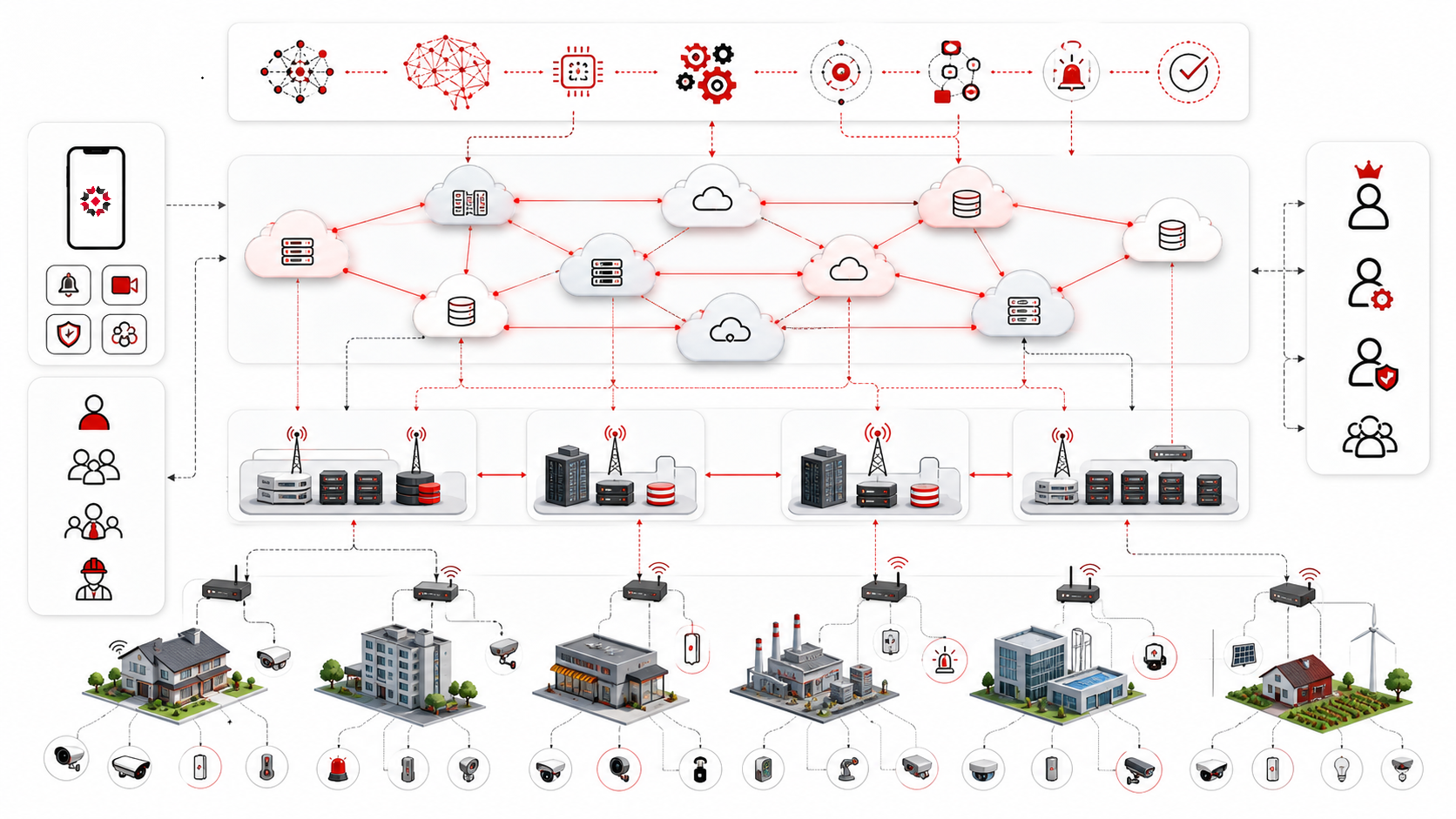
Horus is Fidumtec's platform for orchestrating cameras, sensors, users, permissions, events, automations, and AI inference across distributed operations. It can combine cloud instances, edge resources, and infrastructure owned by each organization.
Is Horus only a camera platform?
No. Video is an important layer, but Horus also integrates IoT, operating rules, calendars, dashboards, communities, permissions, alerts, and remote actions. The goal is to coordinate physical and human signals within one operating model.
What kinds of cameras can Horus integrate?
Horus is designed to work with heterogeneous cameras, especially IP cameras that support standard protocols such as ONVIF or network video streams. Final validation depends on the model, firmware, network, and use case.
Can Horus run in both cloud and edge environments?
Yes. Horus can combine cloud control, edge resources, and local nodes to distribute streaming, recording, automation, and inference according to latency, cost, data sovereignty, and infrastructure availability.
How does Horus manage users, permissions, and communities?
Each instance can organize users, groups, permissions, cameras, scenarios, and access rules. This allows resources to be shared in a controlled way among neighbors, institutions, operators, internal teams, or operational communities.
Does Horus replace existing systems?
Not necessarily. It can complement installed cameras, networks, sensors, monitoring systems, or platforms. The usual approach is to integrate what already exists, organize permissions, and add automation or AI where it creates value.
How are Horus ISP and Horus IoT related to Horus?
Horus is the base platform. Horus ISP is a deployment model for operators that want to monetize video, AI, and community services over their network. Horus IoT is the layer for devices, gateways, sensors, and field automation.
How is a Horus instance created?
When a user downloads Clipxu and registers, a Horus instance is created with minimum capabilities. This initial instance only lets the user see, in the dashboard, the monitors they have been invited to by other Horus users.
Horus instances are classified by the capabilities they can use: users, administrators, groups, cameras, gateways, IoT devices, scenarios, calendars, device zones, recordings, and AI features. When a plan is contracted, the instance enables the capabilities associated with that plan; specific capacities can also be contracted to expand the operation.